


In CVD,
There's no time to wait
The disheartening reversal in CVD trends
Age-adjusted mortality rates (AAMR) due to CVD increased in the US between 2019 and 20224
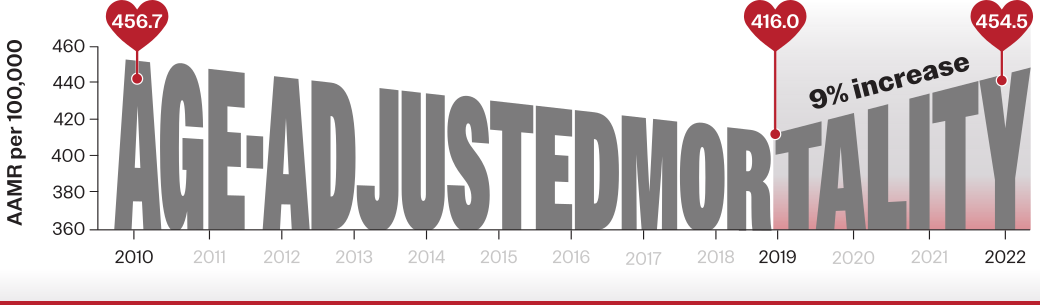
CVD mortality rates began rising in 2010 after decades of steady decline.5
CVD mortality trends for US males and females, 1980 to 20205
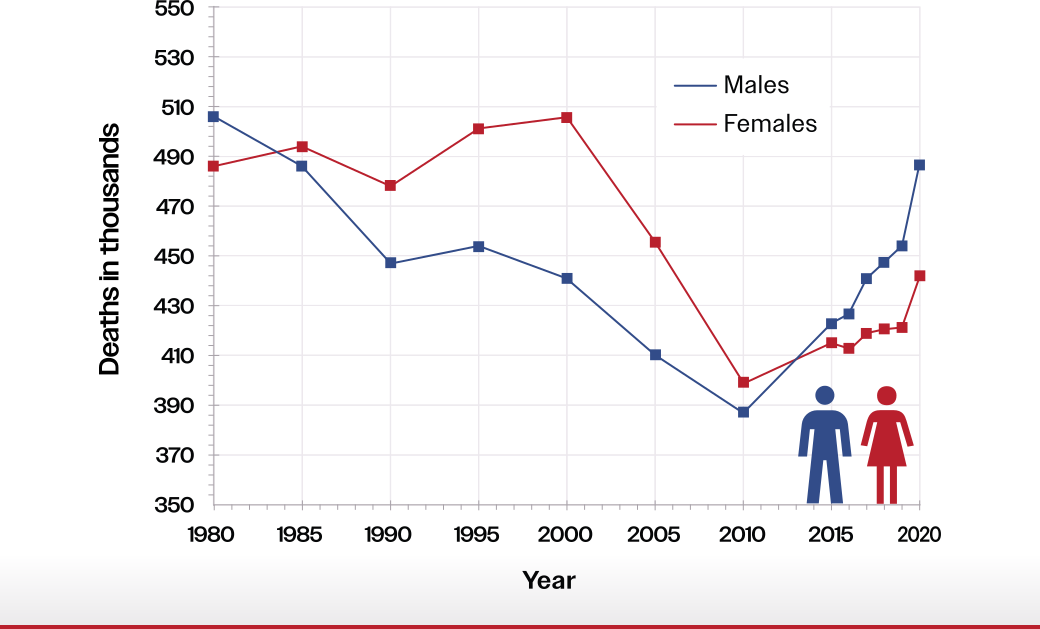
Reprinted from Tsao CW, et al; American Heart Association Council on Epidemiology and Prevention Statistics Committee and Stroke Statistics Subcommittee. Heart disease and stroke statistics—2023 update: a report from the American Heart Association. Circulation. 2023;147(8):e93-e621.
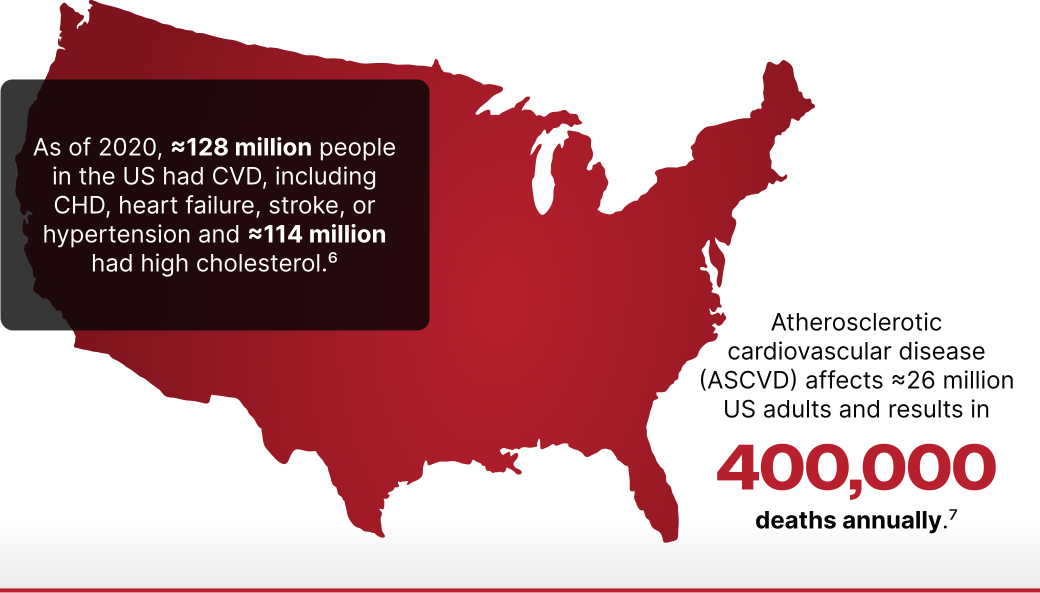
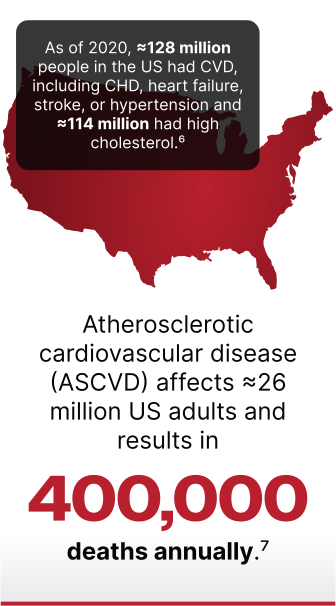
By 2050 > 184 million US adults are expected to be affected by CVD and hypertension, including ≈27 million with coronary heart disease (CHD) and ≈19 million with stroke.2,6
Exploring the link between LDL-C and ASCVD

When considering lipid lowering therapies for patients, which criteria are most important?
References: 1. World Health Organization. Cardiovascular diseases (CVDs). Accessed September 5, 2025. https://www.who.int/news-room/fact-sheets/detail/cardiovascular-diseases-(cvds) 2. Joynt Maddox KE, Elkind MSV, Aparicio HJ, et al. Forecasting the burden of cardiovascular disease and stroke in the United States through 2050—prevalence of risk factors and disease: a presidential advisory from the American Heart Association. Circulation. 2024;150(4):e65–e88. doi:10.1161/CIR.0000000000001256 3. Makover ME, Shapiro MD, Toth PP. There is urgent need to treat atherosclerotic cardiovascular disease risk earlier, more intensively, and with greater precision: a review of current practice and recommendations for improved effectiveness. Am J Prev Cardiol. 2022;12:100371. doi:10.1016/j.ajpc.2022.100371 4. Woodruff RC, Tong X, Khan SS, et al. Trends in cardiovascular disease mortality rates and excess deaths, 2010-2022. Am J Prev Med. 2024;66(4):582-589. doi:10.1016/j.amepre.2023.11.009 5. Tsao CW, Aday AW, Almarzooq ZI, et al; American Heart Association Council on Epidemiology and Prevention Statistics Committee and Stroke Statistics Subcommittee. Heart disease and stroke statistics—2023 update: a report from the American Heart Association. Circulation. 2023;147(8):e93-e621. doi:10.1161/CIR.0000000000001123 6. Joynt Maddox KE, Elkind MSV, Aparicio HJ, et al; American Heart Association. Supplementary material for “Forecasting the burden of cardiovascular disease and stroke in the United States through 2050—prevalence of risk factors and disease: a presidential advisory from the American Heart Association.” Circulation. 2024;150(4):e65–e88. doi:10.1161/CIR.0000000000001256 7. Vasan RS, Enserro DM, Xanthakis V, Beiser AS, Seshadri S. Temporal trends in the remaining lifetime risk of cardiovascular disease among middle-aged adults across six decades: the Framingham Study. Circulation. 2022;145(17):1324-1338. doi:10.1161/CIRCULATIONAHA.121.057889 8. Ference BA, Ginsberg HN, Graham I, et al. Low-density lipoproteins cause atherosclerotic cardiovascular disease. 1. Evidence from genetic, epidemiologic, and clinical studies. A consensus statement from the European Atherosclerosis Society Consensus Panel. Eur Heart J. 2017;38(32):2459-2472. doi:10.1093/eurheartj/ehx144